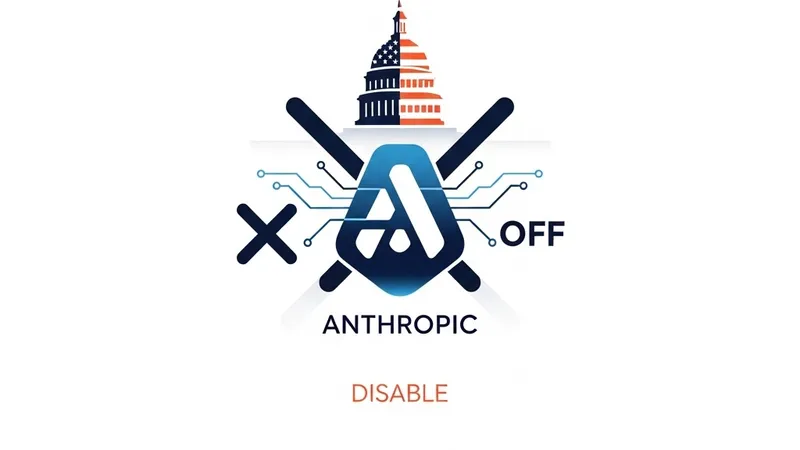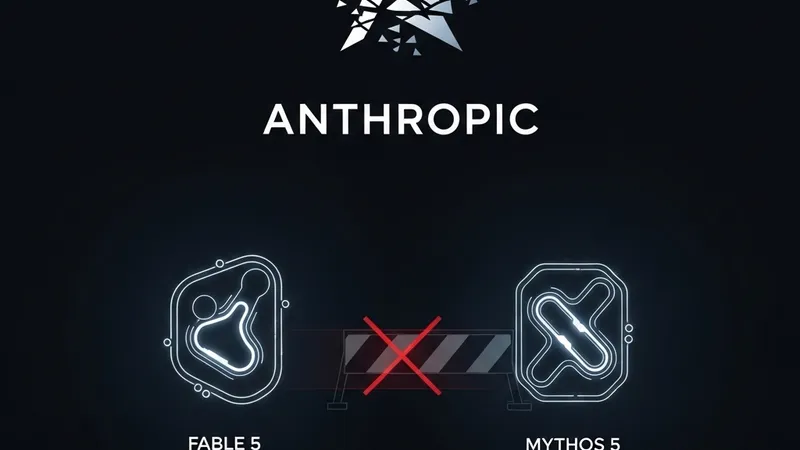
In an unexpected move, leading AI startup Anthropic has abruptly announced the deprecation and deactivation of its highly anticipated Fable 5 and Mythos 5 large language models. The decision, driven by the need to comply with newly updated US export controls, has resulted in the immediate suspension of API access, sparking widespread concern among global AI developers regarding the regulatory future of advanced models.
Reports indicate that this suspension is directly tied to the US Department of Commerce's recent expansion of export restrictions targeting high-compute AI models. Under the new guidelines, models trained with computing power exceeding 10^26 FLOPs and demonstrating high levels of autonomous execution capabilities face strict geographical limitations. After conducting a rigorous compliance review, Anthropic opted to pull these models offline to mitigate regulatory risks. A company spokesperson noted that they are actively engaging with Washington regulators to explore pathways for restoring non-sensitive services without breaching national security frameworks.
From a technical standpoint, Fable 5 was engineered for ultra-complex long-term memory and narrative generation, serving as the core engine for various RPG Agent architectures. Meanwhile, Mythos 5 demonstrated advanced logical reasoning and system-level architectural capabilities that reportedly surpassed even Claude 3.5 Sonnet. Developers relying on frameworks like LangChain and CrewAI to build enterprise-grade automated workflows reported immediate disruptions to their #multi-agent systems, forcing many technical teams to hastily migrate their backend infrastructure to open-source alternatives like Llama 3.
[AgentUpdate Depth Analysis] The disabling of Fable 5 and Mythos 5 by Anthropic is not merely a routine compliance adjustment; it starkly exposes the systemic fragility of the global AI Agent ecosystem when heavily reliant on centralized, closed-source models. Looking ahead, geopolitical tensions and stringent regulatory frameworks will fundamentally reshape the landscape of foundational models. For developers building Multi-Agent Systems, this serves as a massive wake-up call against vendor lock-in. Tying core application logic exclusively to proprietary cloud APIs—especially those exhibiting advanced reasoning and autonomous planning capabilities—introduces fatal supply-chain risks. While models like GPT-4o remain operational for now, the scope of restrictions on highly autonomous agentic models will likely expand. This crisis will inevitably accelerate an industry-wide pivot toward hybrid deployment architectures, integrating robust open-source alternatives like Llama 3 with localized computing. The future of resilient AI agents demands decentralized execution and sovereign control over underlying inference capabilities.