With the tech industry singularly focused on AI models, Anthropic is having an exceptionally good year. The company may soon pull ahead of its main competitor as it looks to raise tens of billions of dollars in a funding round that could put its valuation at some $950 billion (compared to OpenAI’s $854 billion valuation in March). Business customers are increasingly expressing a preference for Claude over ChatGPT, with recent reports showing Anthropic's market share among enterprise users quadrupling since May 2025, recently outpacing OpenAI.
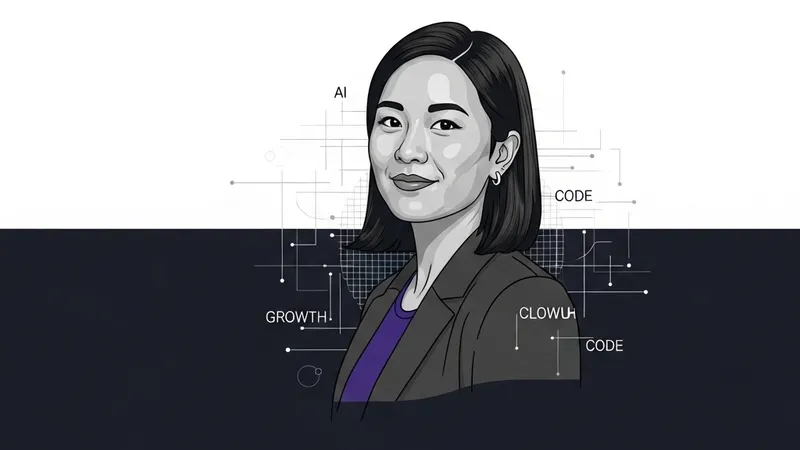
Cat Wu, Anthropic’s head of product for Claude Code and Cowork, has been a key figure in that success. Since joining in August 2024, Wu has helped shepherd Claude through a critical phase, leveling it up from a purely informational chatbot to a robust coding tool and beyond. Overseeing the development of new features, Wu is frequently paired with Boris Cherny, a core technical member and creator of Claude Code; the pair has been characterized as Anthropic’s “Batman and Robin.”
During the second annual Code with Claude conference in San Francisco, Wu discussed product strategy and the competitive landscape. When asked how much of her strategy is reactive to peers, she noted: “The main thing that we design for is staying on the exponential... We instill in everyone the lesson that AI will just continue to get better. For us, we just need to stay at this frontier. We don’t think about competitors. If you do, you end up being perpetually two weeks or a month behind how fast you can execute.”
Anthropic released at least six models last year and has maintained a similar pace this year. Wu expects this momentum to continue as models improve at a steady pace. However, she noted that deployments might vary, referencing “Glasswing” as a primary example. Launched in April, Glasswing invited a small consortium—including Amazon, Apple, CrowdStrike, and Microsoft—to gain access to a new cybersecurity model named Mythos.
Unlike Anthropic's general-purpose models, Mythos is not slated for public release. The company has expressed concerns that the model, designed to scan codebases for software vulnerabilities, could pose risks if mismanaged. This safety-first approach aligns with Wu’s vision of a future where AI shifts from reactive interaction to proactive assistance, anticipating user needs before they are explicitly voiced.