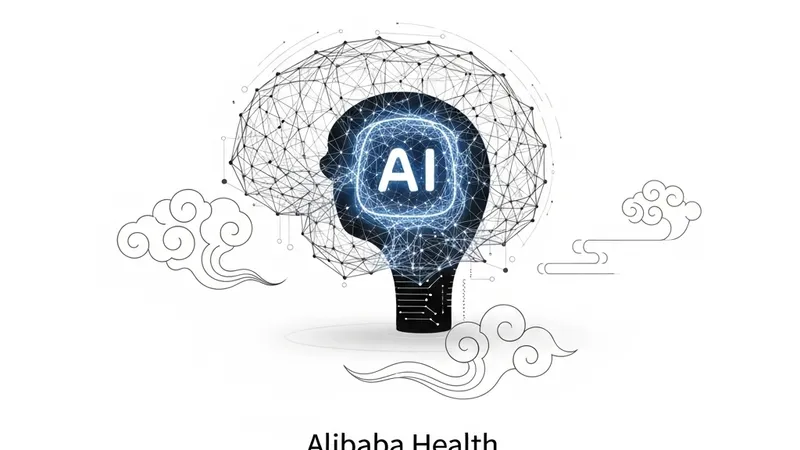
Alibaba Health has officially launched its new medical AI product, "Hydrogen Ion," in Hangzhou. The event drew significant attention from top medical experts from Peking University, Tsinghua University, and the Editor-in-Chief of the British Medical Journal (BMJ) Group. This tool is positioned not as a consumer bot, but as a reliable assistant for China's 5 million physicians.
Wang Xiangzhi, CTO of Alibaba Health, highlighted the critical shortcomings of general-purpose LLMs in medical scenarios. Even with sophisticated prompts, general models can provide incorrect advice on medication management—a fatal flaw in high-stakes healthcare. Furthermore, half of Chinese doctors currently juggle over four different apps to access guidelines and literature. Hydrogen Ion aims to consolidate these workflows while eliminating "AI hallucinations."
The product features a three-pronged approach. First is evidence-based Q&A: every response is backed by clinical guidelines or literature, with direct links to specific paragraphs in the source text. Second is its exclusive content moat; Alibaba Health announced a partnership with the BMJ Group, granting exclusive access to a decade's worth of content from 70 top-tier journals. Third is AI-powered speed reading and translation, reducing the time to analyze complex SCI papers from hours to mere minutes.
Technically, Hydrogen Ion is built on a four-layer evidence-based architecture. The first layer focuses on structural understanding using PICO and GRADE standards. The second layer employs precise semantic retrieval to match clinical queries with relevant evidence. The third layer involves fine-tuning the model to respect medical boundaries and prioritize traceable data over probabilistic generation. Finally, an expert review layer, comprising over 300 clinical specialists, ensures the AI's output aligns with professional consensus. By combining "Evidence + Evidence-based Medicine + AI," Alibaba Health aims to set a new standard for rigor in medical AI assistants.