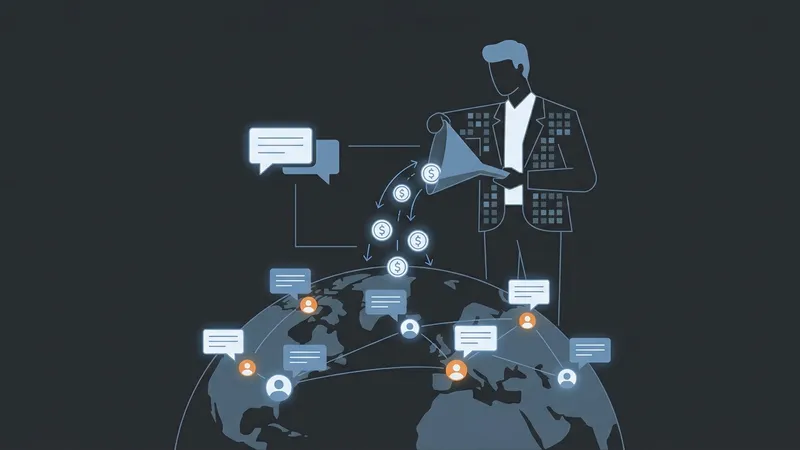
Scam compounds across Southeast Asia are no longer just running mass-message fraud. They are using artificial intelligence and automation to make cybercrime faster, more convincing, and harder for APAC security teams to contain.
For organizations operating in the region, the risk now extends beyond fake messages and obvious phishing attempts. AI-assisted scams can be localized, personalized, and paired with malware, credential theft, mule accounts, and crypto-based money movement.
A UNODC technical policy brief published in September 2025 highlighted that organized crime groups in Southeast Asia are leveraging tools such as AI-generated deepfakes, voice cloning, synthetic identities, multilingual chatbots, automated outreach, and cryptocurrency channels to make fraud far more convincing and scalable.
Furthermore, Infoblox and Vietnamese nonprofit Chong Lua Dao reported in April 2026 that an Android banking trojan operated from compounds like Cambodia's K99 Triumph City was capable of real-time surveillance, biometric data exfiltration, and financial fraud. In response, Google has recently pushed to add built-in Android protections against scam calls, spyware, and OTP abuse.
UNODC estimates that online scam centers cost victims globally between $18 billion and $37 billion in 2023. Separately, the FBI’s Internet Crime Complaint Center recorded $16.6 billion in reported loss in 2024, representing a 33% increase. Forced labor and weak local enforcement remain the root causes of the persistence of these operations.
For banks, fintechs, and telecoms, the defense strategy must evolve past simple message filtering. Robust security controls need to cover the entire lifecycle, including account creation, verification bypass, remote-device risks, and suspicious fund movements.
[AgentUpdate Depth Analysis] The rapid AI-driven transformation of Southeast Asian scam compounds marks the emergence of "Malicious AI Agents" integrated across the cybercrime lifecycle. Criminal syndicates are no longer relying on isolated deepfake tools; instead, they are deploying autonomous, multimodal agent networks capable of social engineering, real-time code execution, and financial exfiltration. This shift necessitates a fundamental leap from static security rulebooks to "Defensive AI Agents" capable of active threat hunting. The future of cybersecurity will be characterized by agent-on-agent warfare, where autonomous defense agents dynamically analyze behavioral anomalies and deploy counter-measures at machine speed. For the wider AI Agent ecosystem to survive, implementing robust "Agent Guardrails" and zero-trust verification frameworks must become an industry-wide mandate to prevent highly capable agents from being maliciously weaponized.