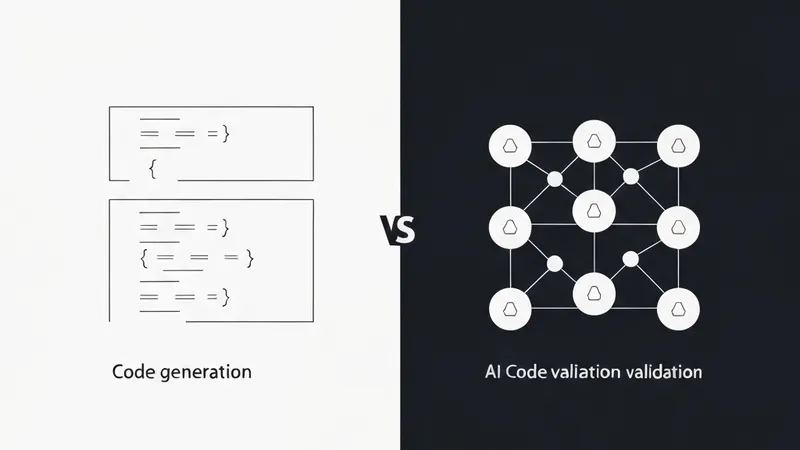
In the current technological landscape, generating code with AI has become the easy part. However, verifying that your AI-generated tests genuinely test something substantial is emerging as a new engineering bottleneck. If your team still relies on Line Coverage as its primary metric, you are likely just shipping bugs disguised with "green checkmarks."
Why Most Developers Misunderstand
- The "Assertionless" Trap: AI models frequently generate tests that merely exercise code paths but feature weak or non-existent assertions. This leads to "false green" suites, giving a deceptive sense of security.
- Manual PR Reviews for AI Diffs: Humans are inherently too slow and prone to errors to effectively catch subtle logic gaps within the often thousands of lines of diffs produced by modern AI agents.
- Static Testing Mindsets: Many treat a test suite as a static artifact. In reality, it should be a dynamic barrier that must be continuously challenged with synthetically injected faults.
The Right Approach
The modern standard involves establishing an autonomous feedback loop where PITest identifies "surviving mutants," and Claude Code proactively refactors the test suite specifically to eliminate them.
- PITest as the Oracle: Utilize pitest-maven to inject bytecode-level faults, known as "mutants." If your tests still pass after these faults are introduced, it indicates a failure within your test suite's ability to detect issues.
- Agentic Refactoring: Pipe the mutations.xml report directly into Claude Code via a CLI hook. This automates the "red-to-green" hardening cycle, turning detected failures into test improvements.
- Granular Prompting: Instead of broadly asking the AI to "fix the tests," provide precise context. Specify the exact surviving mutant (e.g., ConditionalsBoundaryMutator) and its corresponding line number for targeted intervention.
- Mutation Score Enforcement: Implement a strict `mutationThreshold` in your build pipeline, aiming for over 85%. This prevents the merge of any Pull Request where AI-generated logic hasn't been rigorously validated by mutation testing.
Code Example
This bash script illustrates the agentic loop in action: PITest identifies a vulnerability, and Claude Code is invoked to patch that specific test weakness.
# 1. Run mutation testing on the modified module
mvn org.pitest:pitest-maven:mutationCoverage -DtargetClasses=com.fintech.service.Payment*

# 2. Extract the first surviving mutant from the XML report
SURVIVOR=$(xpath -e "//mutation[@status='SURVIVED'][1]" target/pit-reports/mutations.xml)

# 3. Feed the failure context to Claude Code for autonomous hardening
claude-code "The following mutation survived in PaymentService.java: $SURVIVOR.
Modify PaymentServiceTest.java to include a regression test that kills this mutant.
Focus on boundary conditions and strict assertions."
Key Takeaways
- Mutation Score > Line Coverage: While coverage indicates what code was executed, mutation testing reveals what code was genuinely verified and protected against changes.
- Automate the Fix: Claude Code demonstrates significantly higher effectiveness when provided with a specific PITest failure context, rather than being asked to write tests from scratch without clear directives.