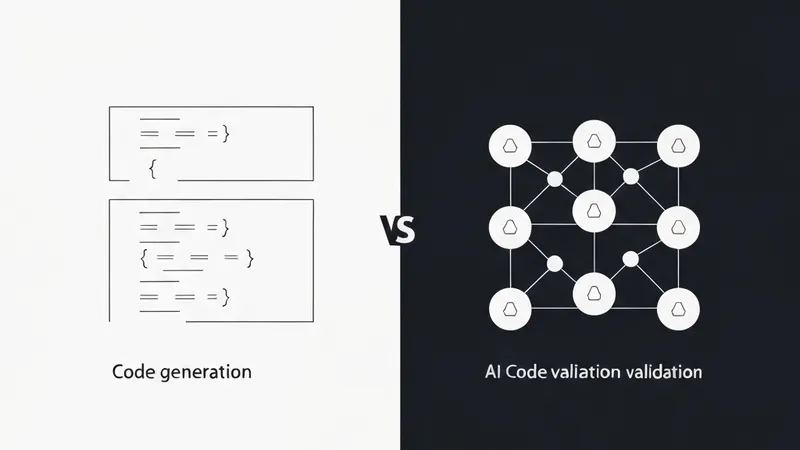
In the current technological landscape, generating code with AI has become the easy part. However, verifying that your AI-generated tests genuinely test something substantial is emerging as a new engineering bottleneck. If your team still relies on Line Coverage as its primary metric, you are likely just shipping bugs disguised with "green checkmarks."
Why Most Developers Misunderstand
- The "Assertionless" Trap: AI models frequently generate tests that merely exercise code paths but feature weak or non-existent assertions. This leads to "false green" suites, giving a deceptive sense of security.
- Manual PR Reviews for AI Diffs: Humans are inherently too slow and prone to errors to effectively catch subtle logic gaps within the often thousands of lines of diffs produced by modern AI agents.
- Static Testing Mindsets: Many treat a test suite as a static artifact. In reality, it should be a dynamic barrier that must be continuously challenged with synthetically injected faults.
The Right Approach
The modern standard involves establishing an autonomous feedback loop where #PITest identifies "surviving mutants," and #Claude Code proactively refactors the test suite specifically to eliminate them.
- PITest as the Oracle: Utilize pitest-maven to inject bytecode-level faults, known as "mutants." If your tests still pass after these faults are introduced, it indicates a failure within your test suite's ability to detect issues.
- Agentic Refactoring: Pipe the mutations.xml report directly into Claude Code via a CLI hook. This automates the "red-to-green" hardening cycle, turning detected failures into test improvements.
- Granular Prompting: Instead of broadly asking the AI to "fix the tests," provide precise context. Specify the exact surviving mutant (e.g., ConditionalsBoundaryMutator) and its corresponding line number for targeted intervention.
- Mutation Score Enforcement: Implement a strict `mutationThreshold` in your build pipeline, aiming for over 85%. This prevents the merge of any Pull Request where AI-generated logic hasn't been rigorously validated by #mutation testing.
Code Example
This bash script illustrates the agentic loop in action: PITest identifies a vulnerability, and Claude Code is invoked to patch that specific test weakness.
# 1. Run mutation testing on the modified module
mvn org.pitest:pitest-maven:mutationCoverage -DtargetClasses=com.fintech.service.Payment*

# 2. Extract the first surviving mutant from the XML report
SURVIVOR=$(xpath -e "//mutation[@status='SURVIVED'][1]" target/pit-reports/mutations.xml)

# 3. Feed the failure context to Claude Code for autonomous hardening
claude-code "The following mutation survived in PaymentService.java: $SURVIVOR.
Modify PaymentServiceTest.java to include a regression test that kills this mutant.
Focus on boundary conditions and strict assertions."
Key Takeaways
- Mutation Score > Line Coverage: While coverage indicates what code was executed, mutation testing reveals what code was genuinely verified and protected against changes.
- Automate the Fix: Claude Code demonstrates significantly higher effectiveness when provided with a specific PITest failure context, rather than being asked to write tests from scratch without clear directives.