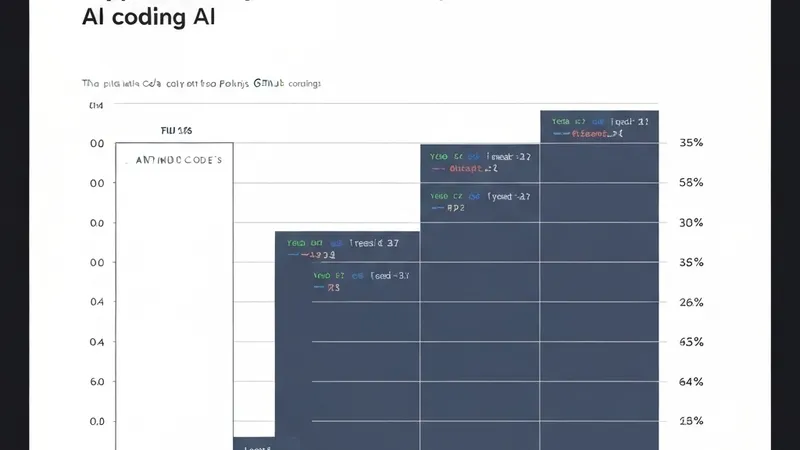
March 2026 marked a significant milestone in the evolution of AI coding agents, as Anthropic's Claude Code was credited with authoring approximately 4% of all public commits pushed to GitHub. This striking figure, verified by SemiAnalysis and not refuted by Anthropic, means that one in every 25 lines of open-source code globally originated from a single AI agent owned by one company. This revelation profoundly redefines the AI coding discourse, shifting the focus from simply choosing a tool to identifying which AI is already silently contributing to a substantial portion of a developer's codebase.
The competitive landscape, primarily featuring Cursor, Claude Code, and OpenAI Codex, has undergone a transformation. What were once distinct tools—an IDE, a CLI agent, and a cloud sandbox—have converged. OpenAI launched an official Codex plugin integrated within Claude Code, while Cursor overhauled its agent orchestration UI to adapt. This dynamic has turned a three-way rivalry into a synergistic "three-way stack," where strategic layer selection is crucial for daily productivity.
Key Performance Indicators and Adoption Signals
Beyond marketing claims, several concrete adoption signals highlight the current standing of these AI coding agents:
- Claude Code — Developer Preference: A February 2026 survey by The Pragmatic Engineer, involving 906 professional engineers, identified Claude Code as the "tool I would fight to keep," with 46% endorsement—significantly outperforming other agents, none of which surpassed 25%.
- Claude Code — GitHub Contribution: SemiAnalysis’s tracker, which identifies Claude Code's signature through consistent diff patterns and commit message cadences, confirmed its authorship of 4% of public GitHub pushes in March. Projections indicate this could reach 20% by December 2026.
- Codex — User Growth: OpenAI’s April 2026 dev-day presentation revealed 3 million weekly active users, a robust 50% month-over-month increase from 2 million users, demonstrating strong growth atop the largest user base in this category.
- Cursor — IDE Relevance: Cursor has not released updated usage statistics since late 2025, suggesting a challenge in maintaining its position. In early April, the company responded by rebuilding its agent orchestration UI, a clear move to stay competitive as AI agent workflows increasingly integrate into and reshape traditional editor environments.
In essence, Claude Code has captured developer loyalty, Codex demonstrates impressive user throughput, and Cursor retains user familiarity as an IDE.
Claude Code: The Capability Leader
Claude Code operates as a CLI-first agent, executing directly within the terminal and modifying files within the local repository. Unlike IDE plugins or cloud sandboxes, it functions intrinsically within the developer's immediate coding environment.
Its primary strengths include:
- Strategic Planning: Claude Code excels at drafting multi-step action plans before initiating any file changes. This pre-execution approval process is a key factor in its popularity among engineers, as it significantly enhances the agent's audibility and allows for human oversight.
- Long-Horizon Task Execution: The agent demonstrates superior performance in complex, extended tasks. For instance, a recent real-world refactor—migrating a 47-file Next.js application from Pages Router to App Router—was completed by Claude Code in 42 minutes with only two rollbacks. OpenAI Codex struggled with the same task, failing twice due to sandbox time constraints.
- MCP Integration: Claude Code serves as the reference implementation for Anthropic's Model Context Pr, indicating its deep integration with Anthropic's foundational AI models and context management capabilities.