Agentic AI, defined as a software system capable of interacting with data and tools with minimal human intervention, operates on a goal-oriented principle. It autonomously breaks down complex tasks into manageable steps and executes them to completion.
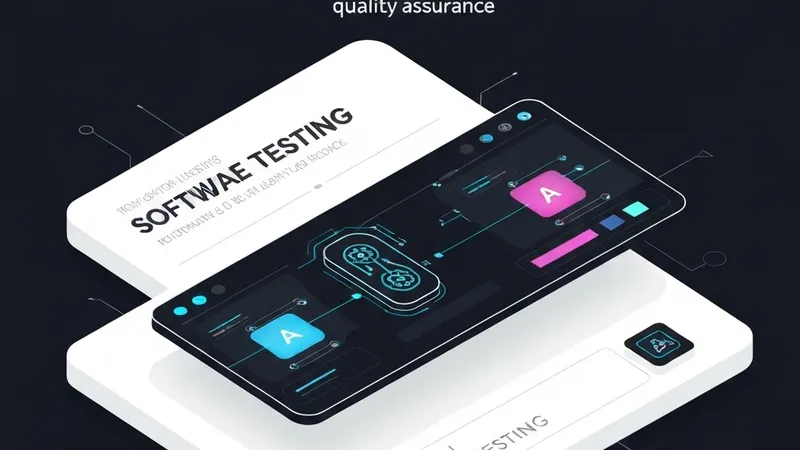
In the realm of software testing, Agentic AI is fundamentally reshaping quality assurance across applications. Unlike traditional methods that depend on rigid scripts and extensive manual effort, Agentic AI empowers teams with intelligent agents that can comprehend requirements, generate comprehensive test cases, and dynamically adapt to changes during execution.
What Agentic AI Means for Software Testing
Agentic AI testing represents a modern paradigm in software quality assurance, leveraging Artificial Intelligence to automate and manage testing tasks. This approach employs autonomous AI agents designed to tackle complex responsibilities, including the generation of sophisticated test scripts with significantly reduced human input.
These intelligent agents possess the ability to learn from real-world scenarios and continuously adjust their behavior over time, thereby enhancing the consistency and accuracy of the testing process. Distinct from conventional testing, which relies heavily on fixed scripts and manual verification, agentic AI testing integrates Machine Learning and large language models (LLMs) to make independent, intelligent decisions.
Key capabilities of Agentic AI systems in testing include:
- Independently designing, executing, and refining test cases, thereby reducing reliance on static scripts.
- Focusing on achieving the overarching testing objective rather than merely adhering to predefined steps.
- Adapting seamlessly to user interface (UI) modifications, new feature introductions, and workflow updates without compromising test integrity.
- Utilizing natural language understanding (NLU), advanced learning techniques, and logical reasoning to emulate human-like decision-making in testing scenarios.
How Agentic AI Powers Software Testing Workflows
A structured overview demonstrates how AI agents manage various testing tasks:
Continuous Testing
Agentic AI testing is instrumental in supporting continuous testing initiatives. It enables development teams to identify and address issues much earlier in the development lifecycle, preventing them from reaching production environments. By maintaining active testing throughout every development stage, it provides rapid feedback following each code change or update.
AI agents are equipped to analyze historical test results and system logs, pinpointing application areas prone to failure. Based on this intelligence, they execute targeted checks, simulate heavy usage conditions, and proactively scan for potential security vulnerabilities, all without requiring manual intervention.
Automated Test Case Creation
Manual test case creation is notoriously time-consuming and often fails to account for complex edge scenarios. Agentic AI testing transforms this by allowing intelligent agents to autonomously generate robust test cases that cover intricate user flows and uncommon operating conditions.
These agents meticulously review application logic, analyze usage patterns, and learn from past defects to construct highly relevant and effective test scenarios. Furthermore, they can directly convert product requirements into executable test steps, eliminating the need for laborious manual scripting.
Efficient Test Execution and Adaptive Learning
AI agents can be seamlessly integrated into Continuous Integration (CI) and Continuous Delivery (CD) pipelines, facilitating automated test execution without human oversight. They are capable of running tests in parallel across a multitude of devices, operating systems, and diverse environments.
Crucially, when changes occur in backend services or APIs, these agents can independently adjust their test steps, ensuring the test flow remains unbroken. For front-end interface changes, agents identify elements based on dynamic patterns rather than fixed selectors. This adaptive capability means that even if element positions or labels are altered, the agents can still accurately locate and interact with them, ensuring the robustness and longevity of tests.